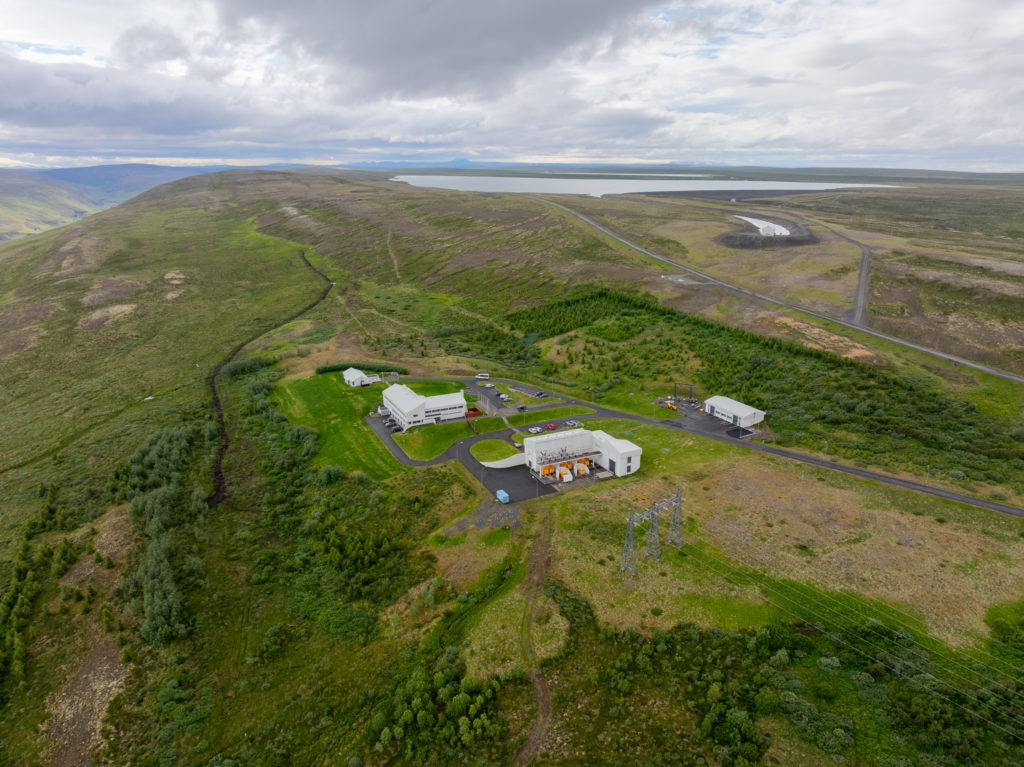
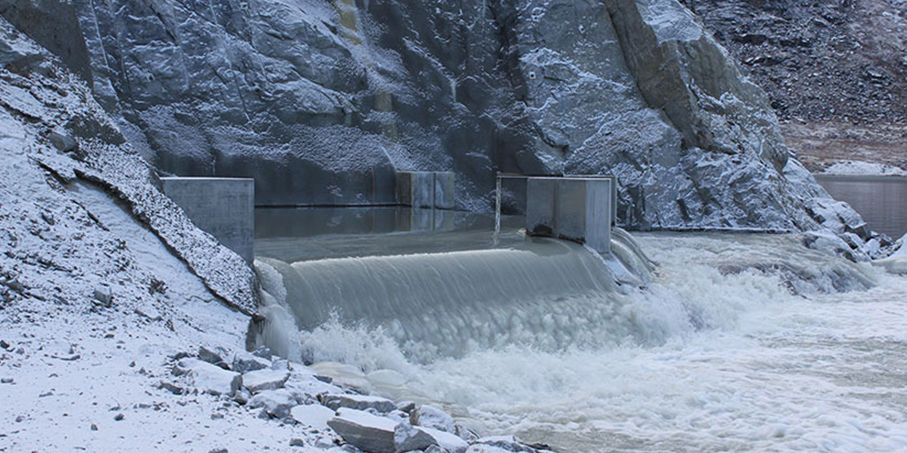
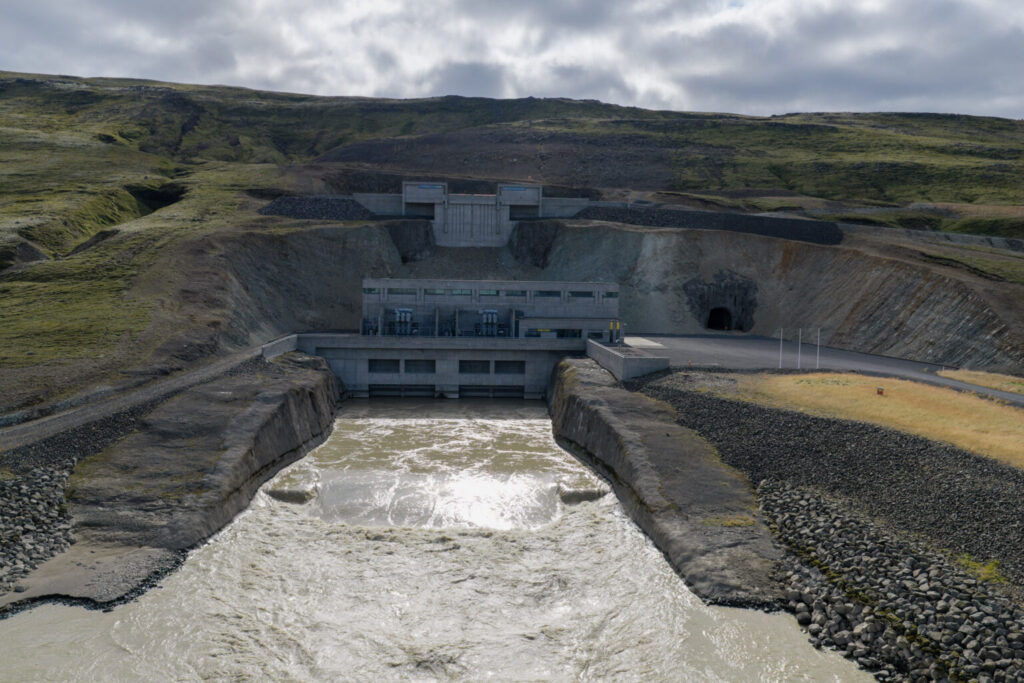
At full reservoir and overflow, the Mjólká river falls into its natural riverbed down a steep cliff above the current powerhouse in many white waterfalls. Steel pipes convey the water from two intake ponds to the common powerhouse of Mjólká I and II. The horizontal double jet Pelton turbine and generator of Mjólká II was replaced by a five jet vertical modern high efficiency vertical Pelton unit in 2011. A new power station, Mjólká III, was constructed upstream of Mjólká I in 2010 and harnesses the remaining water in the river Mjólká as well as water diverted from the river Hofsá. Mjólká IV power station is a future plan drawing water from the same intake reservoir as Mjólká II and releasing the water to the intake pond of Mjólká III. Electro-mechanical equipment of Mjólká I was replaced in 2016. All units are centrally controlled in the main power station. The energy is delivered via 33/66/132 kV switchgear and transmission lines to the Westfjords main transmission lines.
Verkís’ involvement began in 1985 with the refurbishment of the electrical equipment of Mjólká I. In 2005, Verkís conducted a feasibility study for the refurbishment of the existing plants (Mjólká I and II) and further options for harnessing the rivers in the Gláma highland (Mjólká III and IV). Verkís also provided extensive consultation with an economic and technical study as well as completing the final design and the tender documents for all the civil, electrical and mechanical works related to the refurbishment and the new projects. In 2015-16, Verkís was the consultant for the electro-mechanical refurbishment of Mjólká I and in charge of the design the layout, preparation of the technical specification for the equipment and design review.
The Challenge
Reykjavík Energy owns the Hellisheidi geothermal power plant, a combined heat and power plant located about 20 km from Reykjavík in south-west Iceland. The area is one of Iceland’s most active high enthalpy areas. A new area, at Gráuhnúkar, is being investigated for steam and fluid extraction. The purpose of the plants is to meet increased demand for electricity for industrial and domestic use and for hot water for heating. The 303 MWe geothermal power plant in Hellisheiði, Iceland, was commissioned in 5 stages during the years 2006-2011. The first stage was completed in 2006 with two high pressure geothermal turbines of 45 MWe capacity each. The second stage was completed in 2007 with one low pressure geothermal turbine of 33 MWe capacity. The third stage was completed in 2008 with two additional high pressure geothermal turbines, 45 MWe each.
In 2010 a heating plant for hot water generation was added to the plant, intended for district heating. The heat output of the first stage is 133 MWth and two further 133 MWth stages are to follow later. At the same time the Hellisheiði hot water main was put into service. The main is a 19,5 km long pipeline, 0,9-1,0 m in diameter, that carries hot water to Reykjavík. In 2011 the 5th stage of the plant was finished, which includes two new 45 MWe high pressure geothermal turbines, similar to the former turbines, situated in a new power house in Sleggjubeinsdalur.
The plant utilizes 500 kg/s of 180°C geothermal steam for electrical generation. The hot fluid is extracted from 30 wells, 2.000 – 3.000 m deep, and is led through steam and mist separators before entering the turbines. The high pressure steam gathering system operates at 9 bara pressure. The low pressure steam is generated with flashing of brine water from the steam separators at a pressure of 2 bara. The generating units are of single flow, single flash type with axial exhaust. Cooling is achieved through wet cooling towers of the counter flow type.
The main components of the electrical system for each unit consist of a 50 MVA generator, 50 MVA step-up transformer to 220 kV transmission voltage, an 11/11 kV transformer for connection to the 11 kV station service system and two 11/0,4 kV transformers for station service. The generating units, as well as the 11 kV and 0,4 kV distribution boards, are monitored and controlled by the state of the art control- and protection equipment.
Our Solution
Reykjavík Energy owns the Hellisheidi geothermal power plant, a combined heat and power plant located about 20 km from Reykjavík in south-west Iceland. The area is one of Iceland’s most active high enthalpy areas. A new area, at Gráuhnúkar, is being investigated for steam and fluid extraction. The purpose of the plants is to meet increased demand for electricity for industrial and domestic use and for hot water for heating. The 303 MWe geothermal power plant in Hellisheiði, Iceland, was commissioned in 5 stages during the years 2006-2011. The first stage was completed in 2006 with two high pressure geothermal turbines of 45 MWe capacity each. The second stage was completed in 2007 with one low pressure geothermal turbine of 33 MWe capacity. The third stage was completed in 2008 with two additional high pressure geothermal turbines, 45 MWe each.
In 2010 a heating plant for hot water generation was added to the plant, intended for district heating. The heat output of the first stage is 133 MWth and two further 133 MWth stages are to follow later. At the same time the Hellisheiði hot water main was put into service. The main is a 19,5 km long pipeline, 0,9-1,0 m in diameter, that carries hot water to Reykjavík. In 2011 the 5th stage of the plant was finished, which includes two new 45 MWe high pressure geothermal turbines, similar to the former turbines, situated in a new power house in Sleggjubeinsdalur.
The plant utilizes 500 kg/s of 180°C geothermal steam for electrical generation. The hot fluid is extracted from 30 wells, 2.000 – 3.000 m deep, and is led through steam and mist separators before entering the turbines. The high pressure steam gathering system operates at 9 bara pressure. The low pressure steam is generated with flashing of brine water from the steam separators at a pressure of 2 bara. The generating units are of single flow, single flash type with axial exhaust. Cooling is achieved through wet cooling towers of the counter flow type.
The main components of the electrical system for each unit consist of a 50 MVA generator, 50 MVA step-up transformer to 220 kV transmission voltage, an 11/11 kV transformer for connection to the 11 kV station service system and two 11/0,4 kV transformers for station service. The generating units, as well as the 11 kV and 0,4 kV distribution boards, are monitored and controlled by the state of the art control- and protection equipment.
The Result
Reykjavík Energy owns the Hellisheidi geothermal power plant, a combined heat and power plant located about 20 km from Reykjavík in south-west Iceland. The area is one of Iceland’s most active high enthalpy areas. A new area, at Gráuhnúkar, is being investigated for steam and fluid extraction. The purpose of the plants is to meet increased demand for electricity for industrial and domestic use and for hot water for heating. The 303 MWe geothermal power plant in Hellisheiði, Iceland, was commissioned in 5 stages during the years 2006-2011. The first stage was completed in 2006 with two high pressure geothermal turbines of 45 MWe capacity each. The second stage was completed in 2007 with one low pressure geothermal turbine of 33 MWe capacity. The third stage was completed in 2008 with two additional high pressure geothermal turbines, 45 MWe each.
In 2010 a heating plant for hot water generation was added to the plant, intended for district heating. The heat output of the first stage is 133 MWth and two further 133 MWth stages are to follow later. At the same time the Hellisheiði hot water main was put into service. The main is a 19,5 km long pipeline, 0,9-1,0 m in diameter, that carries hot water to Reykjavík. In 2011 the 5th stage of the plant was finished, which includes two new 45 MWe high pressure geothermal turbines, similar to the former turbines, situated in a new power house in Sleggjubeinsdalur.
The plant utilizes 500 kg/s of 180°C geothermal steam for electrical generation. The hot fluid is extracted from 30 wells, 2.000 – 3.000 m deep, and is led through steam and mist separators before entering the turbines. The high pressure steam gathering system operates at 9 bara pressure. The low pressure steam is generated with flashing of brine water from the steam separators at a pressure of 2 bara. The generating units are of single flow, single flash type with axial exhaust. Cooling is achieved through wet cooling towers of the counter flow type.
The main components of the electrical system for each unit consist of a 50 MVA generator, 50 MVA step-up transformer to 220 kV transmission voltage, an 11/11 kV transformer for connection to the 11 kV station service system and two 11/0,4 kV transformers for station service. The generating units, as well as the 11 kV and 0,4 kV distribution boards, are monitored and controlled by the state of the art control- and protection equipment.