Project overview
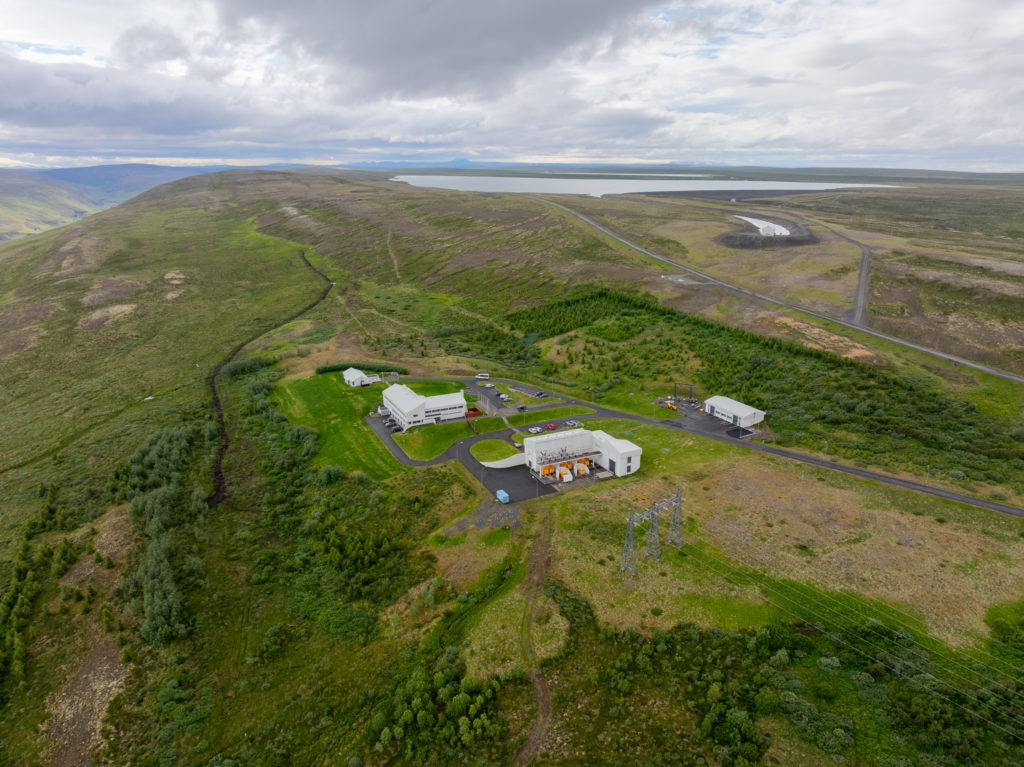
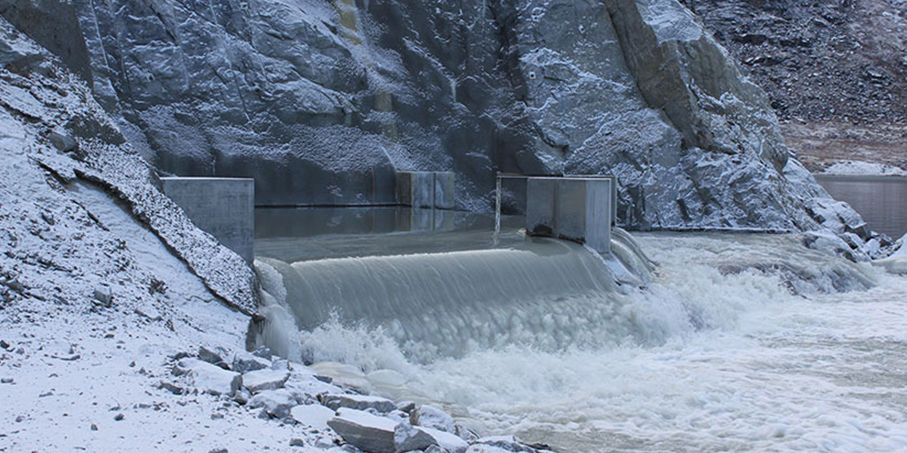
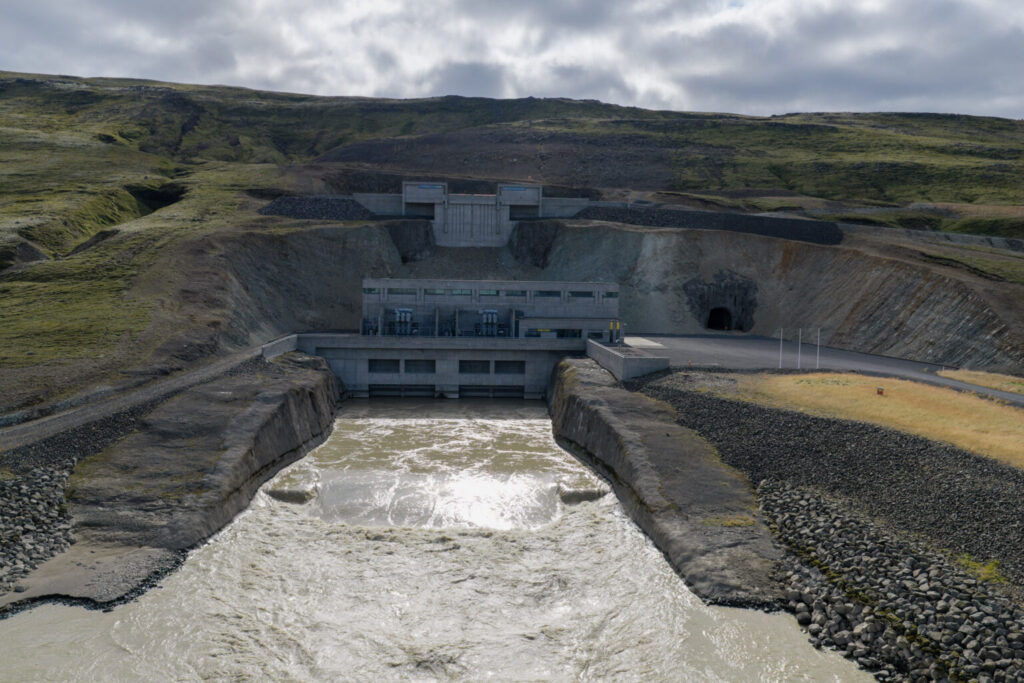
At full reservoir and overflow, the Mjólká river falls into its natural riverbed down a steep cliff above the current powerhouse in many white waterfalls. Steel pipes convey the water from two intake ponds to the common powerhouse of Mjólká I and II. The horizontal double jet Pelton turbine and generator of Mjólká II was replaced by a five jet vertical modern high efficiency vertical Pelton unit in 2011. A new power station, Mjólká III, was constructed upstream of Mjólká I in 2010 and harnesses the remaining water in the river Mjólká as well as water diverted from the river Hofsá. Mjólká IV power station is a future plan drawing water from the same intake reservoir as Mjólká II and releasing the water to the intake pond of Mjólká III. Electro-mechanical equipment of Mjólká I was replaced in 2016. All units are centrally controlled in the main power station. The energy is delivered via 33/66/132 kV switchgear and transmission lines to the Westfjords main transmission lines.
Verkís’ involvement began in 1985 with the refurbishment of the electrical equipment of Mjólká I. In 2005, Verkís conducted a feasibility study for the refurbishment of the existing plants (Mjólká I and II) and further options for harnessing the rivers in the Gláma highland (Mjólká III and IV). Verkís also provided extensive consultation with an economic and technical study as well as completing the final design and the tender documents for all the civil, electrical and mechanical works related to the refurbishment and the new projects. In 2015-16, Verkís was the consultant for the electro-mechanical refurbishment of Mjólká I and in charge of the design the layout, preparation of the technical specification for the equipment and design review.
Current plant description:
Mjólkávirkjun I
Commissioned: 1958
Refurbishment of electro-mechanical parts: 2016
Installed capacity: 3,2 MW
Horizontal Francis turbine
Rated speed 1000 min-1
Was previously a 2,4 MW horizontal Pelton turbine, 2 jets
Rated speed: 500 rpm
Generator: 3,4 MVA, 6,3 kV
Annual energy prod.: 13,5 GWh
Gross head: 210 m
Rated discharge: 1,7 m3/s
Mjólkávirkjun II
Commissioned: 1975
Refurbishment of electro-mechanical parts: 2011
Installed capacity: 7,0 MW
Vertical Pelton unit, 5 jets
Rated speed 1000 min-1
Was previously a 5,7 MW horizontal Pelton turbine, 2 jets
Generator: 8,5 MVA , 6,3 kV
Annual en. prod.: 42 GWh (49 GWh)
Gross head: 488 m
Rated discharge: 1,9 m3/s
Mjólkávirkjun III
Commissioned: 2010
Installed capacity: 1,15 MW
Francis turbine, horizontal
Rated speed: 1000 min-1
Generator: 1,35 MVA, 0,4 kV
Annual energy prod.: 6,5 GWh
Gross head: 99,5 m
Rated discharge: 1,4 m3/s
Mjólkávirkjun IV
Commissioning: In planning
Installed capacity: 1,0 MW
Planned a vertical Pelton turbine, having 4 jets
Rated speed: 600 min-1
Generator: 1,1 MVA, 0,4 kV
Annual energy prod.: 1,5 GWh
Gross head: 176 m
Rated discharge: 0,8 m3/s
12,35MW
Total Planned Capacity
63,5gwh
Annual Generation
The Challenge
The Mjólká Hydroelectric Project has been progressively expanded and modernised to maximise the renewable energy potential of the Mjólká and Hofsá rivers in Iceland’s Westfjords. The project required the refurbishment of ageing hydropower facilities, the integration of new generating units and the optimisation of the entire hydropower scheme while ensuring reliable operation and increased energy production.
Our Solution
Verkís has supported the development of Mjólká since 1985, providing feasibility studies, technical and economic assessments, detailed engineering design and tender documentation for both refurbishment and expansion projects. Our multidisciplinary services have included civil, mechanical and electrical engineering, electromechanical refurbishment, equipment specification, design review and technical consultancy for the development of Mjólká I, II and III, as well as the planned Mjólká IV power station.
The Result
The modernisation and expansion of the Mjólká Hydroelectric Project have significantly increased efficiency, reliability and renewable electricity generation for the Westfjords. Through successive upgrades and new developments, Verkís has helped transform the scheme into a flexible hydropower system that continues to provide clean, reliable energy while extending the operational life of the existing infrastructure and enabling future expansion.

 Danish
 Icelandic