Project overview
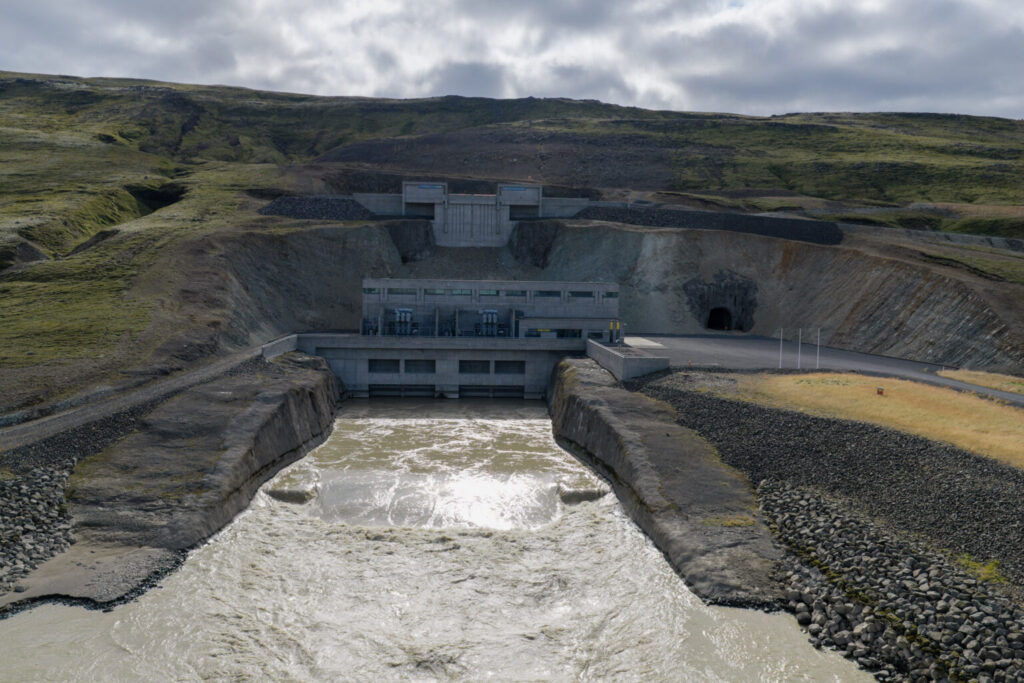
Sultartangi Hydropower Plant is part of a series of reservoirs and power stations in the Þjórsá and Tungnaá river systems in South Iceland. The current upgrade focuses on expanding the plant’s headrace tunnels to reduce hydraulic losses and improve the efficiency of the existing power station.
The headrace tunnels are approximately 3.5 km long, with the tunnel floor being lowered along approximately 3.1 km. The tunnels will be deepened by nearly 5 metres, with approximately 125,000 m³ of rock excavated. The tunnel cross-section will increase from just over 150 m² to approximately 180 m².
By reducing resistance to water flow through the tunnels, the upgrade is expected to increase electricity generation by more than 20 GWh per year, while the installed capacity remains unchanged at 134 MW. This enables more electricity to be generated from the same volume of water, improving the utilisation of the existing infrastructure.
The project also provides an opportunity to inspect the condition of the tunnels and carry out necessary improvements while they are out of operation.
Verkís is responsible for the design of the upgrades and preparation of tender documents. Verkís has a long-standing involvement with Sultartangi, having provided engineering services during the original development of the power station and subsequently supported numerous maintenance and upgrade projects. In 2017, Verkís also carried out a feasibility study investigating options for increasing the plant’s capacity and improving its efficiency.
20++
Additional annual electricity generation
134MW
Existing installed capacity
3,5km
Headrace tunnel length
The Challenge
The objective was to increase electricity generation and improve the efficiency of Sultartangi Hydropower Plant without increasing water flow or the plant’s installed capacity. Hydraulic losses in the approximately 3.5 km-long headrace tunnels limited the efficient utilisation of the available water resources.
Our Solution
Verkís designed an upgrade involving the widening and deepening of the headrace tunnels. The tunnel floor will be lowered along approximately 3.1 km, with nearly 125,000 m³ of rock excavated. The cross-section will increase from just over 150 m² to approximately 180 m², reducing resistance to water flow and associated hydraulic losses.
Verkís also prepared the tender documents and supported the detailed planning of the works, including risk assessments and monitoring and response plans to ensure safe execution.
The Result
The upgrade is expected to increase electricity generation by more than 20 GWh annually while maintaining the existing installed capacity of 134 MW. By improving hydraulic efficiency, the project enables more energy to be produced from the same water resources and extends the value of existing hydropower infrastructure.
The project is an example of how targeted upgrades to existing energy infrastructure can increase renewable electricity generation without requiring additional water resources or a new power plant.

 Danish
 Icelandic