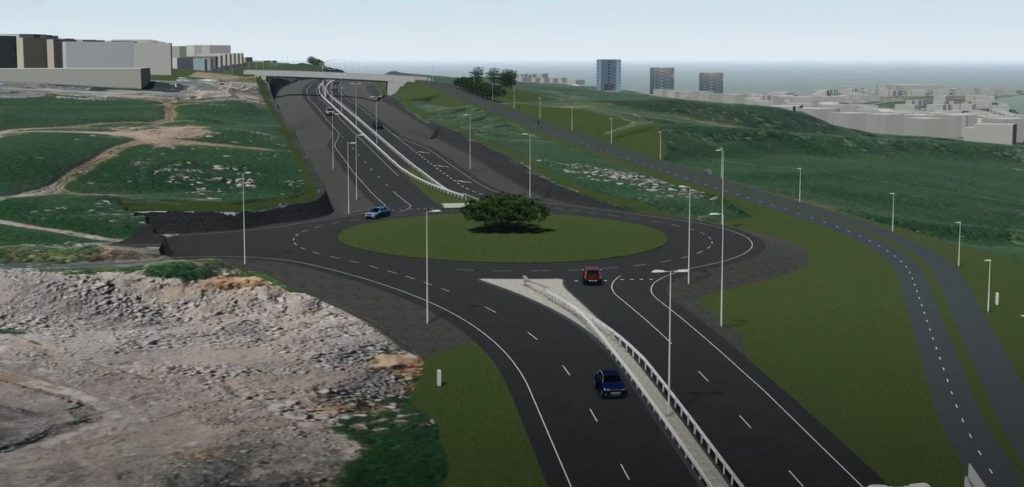
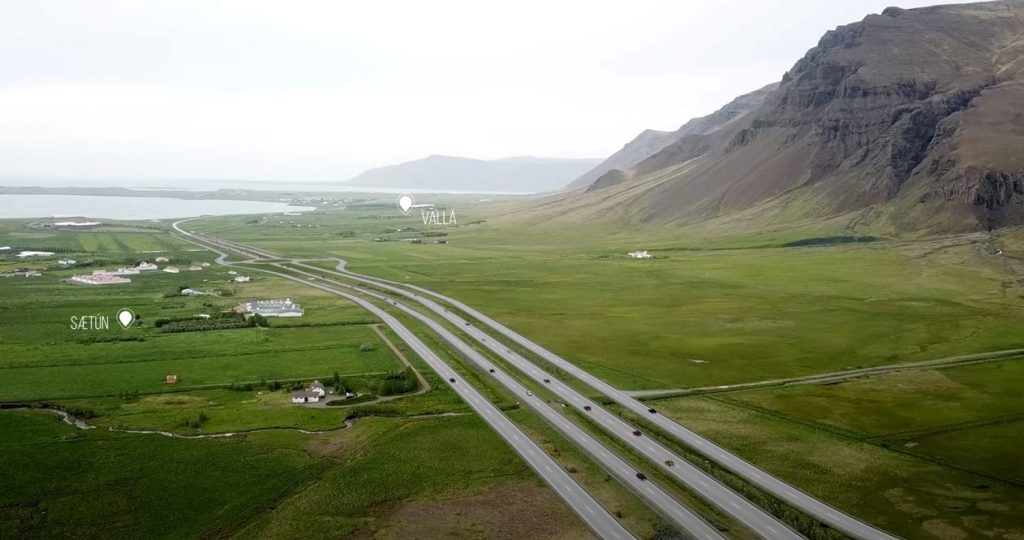
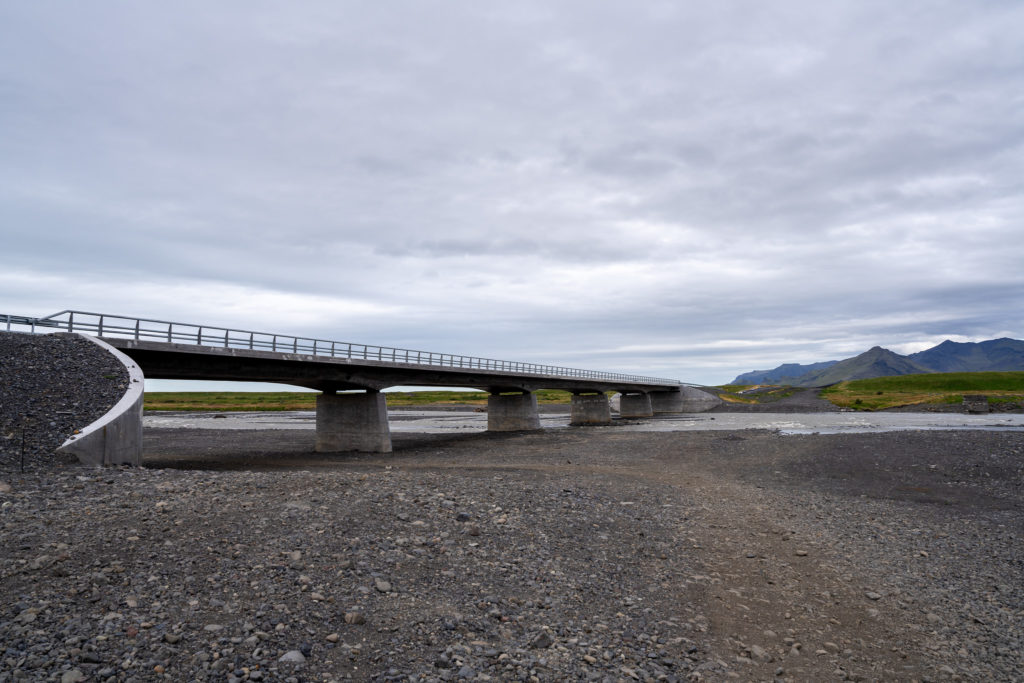
The town of Sisimiut is the second most populous in Greenland, with around 5,600 inhabitants. The town’s harbour is the northernmost in the country, where layers of ice do not hinder sailing in the winter. Fishing is the largest industry in Sisimiut, and residents there have long discussed getting a road to Kangerlussuaq and thus having the possibility to export fish through the international airport there. The road will also open tourist access to the area, connect the residents of the rural community, and simplify the access of scientists to the wilderness of Greenland.
The conditions for road construction are diverse and quite complex. Mountains and hilly terrain up to 500 m high have to be crossed, rocks and cuttings must be blasted, and it will be necessary to open more mines along the road to extract material for road construction. Loose layers of soil that are considered suitable are rare, and therefore material processing will be quite a large part of construction, even more extensive than the road construction itself. For the most part, there are patches of rock and wet soil and there is permafrost in the ground, which causes the top layer of the soil to be constantly moving.
The Challenge
Reykjavík Energy owns the Hellisheidi geothermal power plant, a combined heat and power plant located about 20 km from Reykjavík in south-west Iceland. The area is one of Iceland’s most active high enthalpy areas. A new area, at Gráuhnúkar, is being investigated for steam and fluid extraction. The purpose of the plants is to meet increased demand for electricity for industrial and domestic use and for hot water for heating. The 303 MWe geothermal power plant in Hellisheiði, Iceland, was commissioned in 5 stages during the years 2006-2011. The first stage was completed in 2006 with two high pressure geothermal turbines of 45 MWe capacity each. The second stage was completed in 2007 with one low pressure geothermal turbine of 33 MWe capacity. The third stage was completed in 2008 with two additional high pressure geothermal turbines, 45 MWe each.
In 2010 a heating plant for hot water generation was added to the plant, intended for district heating. The heat output of the first stage is 133 MWth and two further 133 MWth stages are to follow later. At the same time the Hellisheiði hot water main was put into service. The main is a 19,5 km long pipeline, 0,9-1,0 m in diameter, that carries hot water to Reykjavík. In 2011 the 5th stage of the plant was finished, which includes two new 45 MWe high pressure geothermal turbines, similar to the former turbines, situated in a new power house in Sleggjubeinsdalur.
The plant utilizes 500 kg/s of 180°C geothermal steam for electrical generation. The hot fluid is extracted from 30 wells, 2.000 – 3.000 m deep, and is led through steam and mist separators before entering the turbines. The high pressure steam gathering system operates at 9 bara pressure. The low pressure steam is generated with flashing of brine water from the steam separators at a pressure of 2 bara. The generating units are of single flow, single flash type with axial exhaust. Cooling is achieved through wet cooling towers of the counter flow type.
The main components of the electrical system for each unit consist of a 50 MVA generator, 50 MVA step-up transformer to 220 kV transmission voltage, an 11/11 kV transformer for connection to the 11 kV station service system and two 11/0,4 kV transformers for station service. The generating units, as well as the 11 kV and 0,4 kV distribution boards, are monitored and controlled by the state of the art control- and protection equipment.
Our Solution
Reykjavík Energy owns the Hellisheidi geothermal power plant, a combined heat and power plant located about 20 km from Reykjavík in south-west Iceland. The area is one of Iceland’s most active high enthalpy areas. A new area, at Gráuhnúkar, is being investigated for steam and fluid extraction. The purpose of the plants is to meet increased demand for electricity for industrial and domestic use and for hot water for heating. The 303 MWe geothermal power plant in Hellisheiði, Iceland, was commissioned in 5 stages during the years 2006-2011. The first stage was completed in 2006 with two high pressure geothermal turbines of 45 MWe capacity each. The second stage was completed in 2007 with one low pressure geothermal turbine of 33 MWe capacity. The third stage was completed in 2008 with two additional high pressure geothermal turbines, 45 MWe each.
In 2010 a heating plant for hot water generation was added to the plant, intended for district heating. The heat output of the first stage is 133 MWth and two further 133 MWth stages are to follow later. At the same time the Hellisheiði hot water main was put into service. The main is a 19,5 km long pipeline, 0,9-1,0 m in diameter, that carries hot water to Reykjavík. In 2011 the 5th stage of the plant was finished, which includes two new 45 MWe high pressure geothermal turbines, similar to the former turbines, situated in a new power house in Sleggjubeinsdalur.
The plant utilizes 500 kg/s of 180°C geothermal steam for electrical generation. The hot fluid is extracted from 30 wells, 2.000 – 3.000 m deep, and is led through steam and mist separators before entering the turbines. The high pressure steam gathering system operates at 9 bara pressure. The low pressure steam is generated with flashing of brine water from the steam separators at a pressure of 2 bara. The generating units are of single flow, single flash type with axial exhaust. Cooling is achieved through wet cooling towers of the counter flow type.
The main components of the electrical system for each unit consist of a 50 MVA generator, 50 MVA step-up transformer to 220 kV transmission voltage, an 11/11 kV transformer for connection to the 11 kV station service system and two 11/0,4 kV transformers for station service. The generating units, as well as the 11 kV and 0,4 kV distribution boards, are monitored and controlled by the state of the art control- and protection equipment.
The Result
Reykjavík Energy owns the Hellisheidi geothermal power plant, a combined heat and power plant located about 20 km from Reykjavík in south-west Iceland. The area is one of Iceland’s most active high enthalpy areas. A new area, at Gráuhnúkar, is being investigated for steam and fluid extraction. The purpose of the plants is to meet increased demand for electricity for industrial and domestic use and for hot water for heating. The 303 MWe geothermal power plant in Hellisheiði, Iceland, was commissioned in 5 stages during the years 2006-2011. The first stage was completed in 2006 with two high pressure geothermal turbines of 45 MWe capacity each. The second stage was completed in 2007 with one low pressure geothermal turbine of 33 MWe capacity. The third stage was completed in 2008 with two additional high pressure geothermal turbines, 45 MWe each.
In 2010 a heating plant for hot water generation was added to the plant, intended for district heating. The heat output of the first stage is 133 MWth and two further 133 MWth stages are to follow later. At the same time the Hellisheiði hot water main was put into service. The main is a 19,5 km long pipeline, 0,9-1,0 m in diameter, that carries hot water to Reykjavík. In 2011 the 5th stage of the plant was finished, which includes two new 45 MWe high pressure geothermal turbines, similar to the former turbines, situated in a new power house in Sleggjubeinsdalur.
The plant utilizes 500 kg/s of 180°C geothermal steam for electrical generation. The hot fluid is extracted from 30 wells, 2.000 – 3.000 m deep, and is led through steam and mist separators before entering the turbines. The high pressure steam gathering system operates at 9 bara pressure. The low pressure steam is generated with flashing of brine water from the steam separators at a pressure of 2 bara. The generating units are of single flow, single flash type with axial exhaust. Cooling is achieved through wet cooling towers of the counter flow type.
The main components of the electrical system for each unit consist of a 50 MVA generator, 50 MVA step-up transformer to 220 kV transmission voltage, an 11/11 kV transformer for connection to the 11 kV station service system and two 11/0,4 kV transformers for station service. The generating units, as well as the 11 kV and 0,4 kV distribution boards, are monitored and controlled by the state of the art control- and protection equipment.